|
|
|
|
|
|
1950s
|
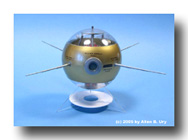
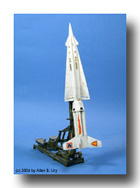
Before the Second World War, rocketry and spaceflight seemed as fanciful as anything out of a Buck Rogers comic strip. But the technological breakthroughs made by both the Germans and the Allies during WWII turned what had been a child-like dream into not just a conceivable reality, but a political priority. With the United States and Soviet Union locked in a life-or-death struggle for planetary supremacy, it became incumbent upon both superpowers to use spaceflight milestones as key instruments of political propaganda. In the decade's first half, ex-German rocketeers like Werner von Braun and German émigré Willy Ley were used to introduce the American public to the realistic possibilities of manned space flight, their then-state-of-the-art engineering concepts appearing in everything from Collier's Magazine to the "Disneyland" TV series. And then, on October 4, 1957, America awoke to learn that what had been "science fiction" was now science fact: The Soviets had launched Sputnik, the world's first artificial satellite, into orbit. The Space Age had officially begun. |
Click Photos to Enlarge
|
|
|
|
 |
||||||||||||
|
|
|
|
||||||||||||
|
|
|
|
 |
||||||||||||
|
|
|
|
||||||||||||
|
|
|
|
 |
||||||||||||
|
|
|
|
Home X-Planes Concept Aircraft Spacecraft & Missiles Concept Spacecraft Science Fiction Grab Bag